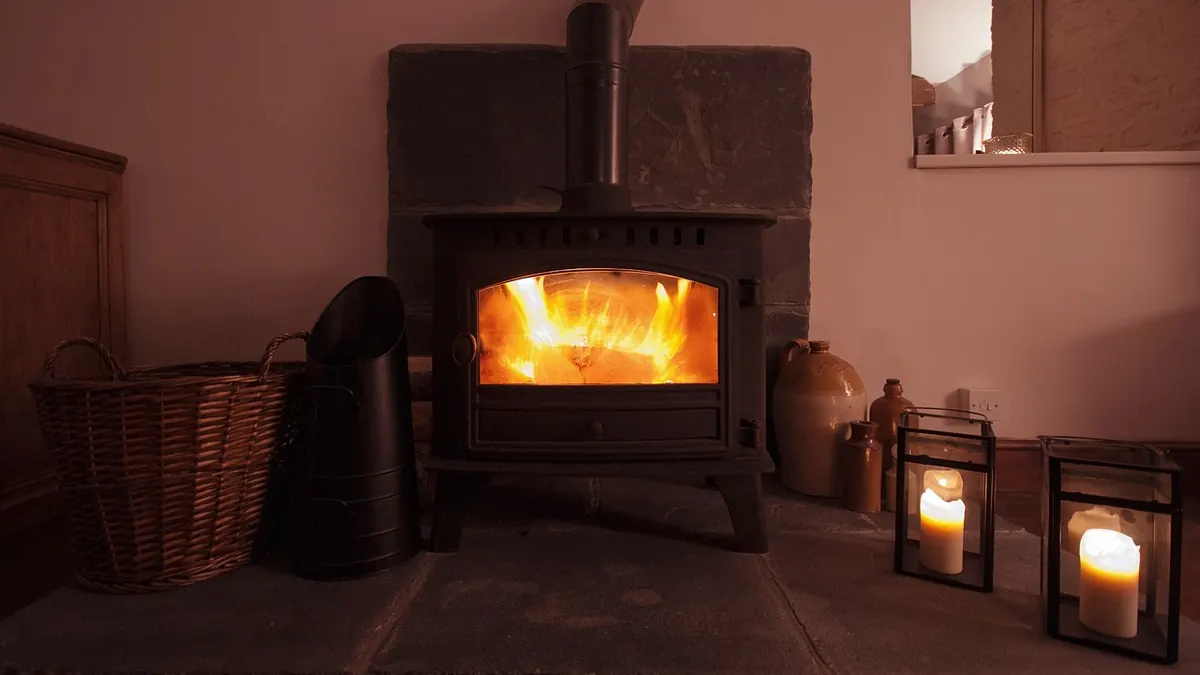
A well-run wood stove is one of the quiet pleasures of a cold house: real heat, a bit of flicker, and no boiler ticking away in the background. The trickier part is having a fire that is still alive at six in the morning. It comes down to three things — dry fuel, enough air to burn cleanly, and a bed of embers that holds heat instead of smothering it. Get those right and an overnight burn becomes routine rather than luck.
Wet wood is the most common reason a fire dies at 2am. The heat that should be warming your room goes into boiling water out of the logs instead. You want wood split, stacked and dried to below about 20 per cent moisture: a year for softwood, two for most hardwood, or kiln-dried if you have not had time to season your own.
Then check the stove itself:
The old method — paper, kindling, then logs on top — smokes while it gets going and takes longer to warm the flue. The top-down lay is cleaner and catches faster.
Heat rises through the kindling and ignites the splits below, so the fire builds downward and the flue warms quickly. No firelighters? Crumpled newspaper under the kindling works, as long as you avoid glossy magazines and anything with plastic tape.
Resist the urge to fill the firebox the moment there is a flame. A big log thrown onto a young fire will sit and smoulder, producing smoke and tar rather than heat. Leave the primary air fully open, hold the door slightly ajar for the first few minutes if your manual allows it, then close it and let the kindling do its work.
When the flames are steady, add a couple of small splits. Once those are burning well, add larger ones. If you can see the secondary burn working — jets of flame curling from the tubes near the baffle — the stove is hot enough to take a full load. A stovetop or flue thermometer helps, but follow the range in your stove's manual rather than a figure you read online.
The load you put in at bedtime decides how warm you are at dawn. Give yourself half an hour: a fire damped down immediately after loading will not hold.
Let the new load burn brightly for ten to twenty minutes, until flames are running through the whole stack. Then close the primary air in stages — half, wait, then most of the way — keeping the secondary air or airwash open a little. That small opening keeps the glass clear, burns off the gases and stops the flue cooling too far.
What you want is a lazy but visible flame, not a dark firebox with a faint glow. If the glass turns black, the chimney puts out grey smoke, or you can smell wood smoke in the room, the fire is starved of air and is laying down tar in the flue. That deposit is what chimney fires are made of, so a slow smoulder is no bargain.
Control heat with fuel as well as air. Larger splits and a fuller firebox give a longer burn at a lower
Photo: StockSnap / Pixabay
Smoke control areas cover much of urban Britain. Here's how to check your postcode, which fuels are authorised, and...
Wet wood wastes heat and lines your flue with tar. Here's how to split, stack and test firewood so it burns hot,...
A practical guide to fire guards, log baskets, ash caddies, tools and hearth rugs — how to choose kit that keeps...

Your cozy guide to fireplaces and hearth living.
