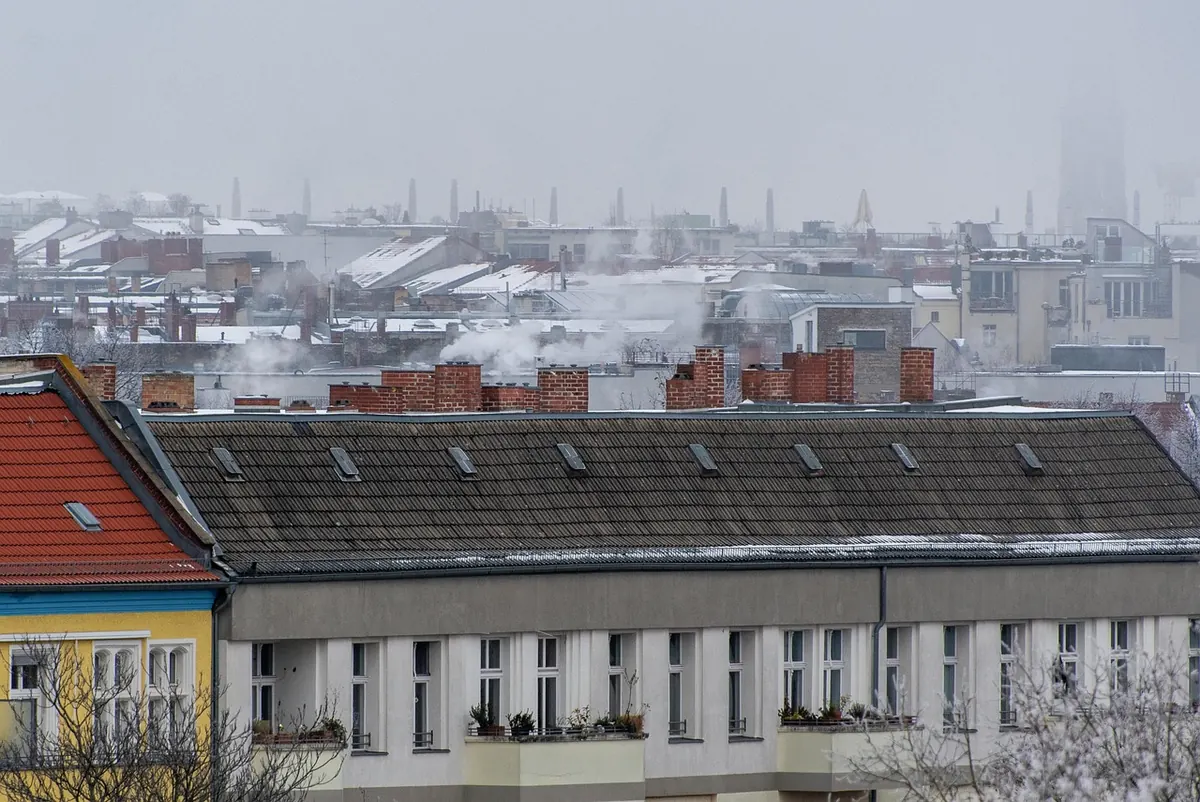
Light a fire in the wrong postcode and you can end up with a letter from the council. Thousands of streets across the UK sit inside smoke control areas, where you may only burn authorised fuels or use an appliance that has been exempted for the purpose. The rules are not new — they go back to the Clean Air Acts — but they have been tightened in recent years, and plenty of homeowners are still unsure whether their stove is compliant. Here is what the rules actually say, how to check where you stand, and the habits that keep you on the right side of them.
A smoke control area is a defined patch of land — often a town centre, a city district or a whole borough — designated by the local council under the Clean Air Act 1993. Inside that boundary, it is an offence to emit smoke from the chimney of a building, or from a chimney serving a furnace, unless you are burning an authorised fuel or using an exempt appliance.
The wording matters. The offence concerns smoke leaving your chimney, not the act of owning a stove or lighting a fire. A well-run appliance burning good fuel may produce almost nothing visible; the same appliance loaded with damp wood can smoke hard. That is why enforcement usually begins with a complaint from a neighbour rather than with an officer walking the streets counting chimneys.
Smoke control areas have accumulated over decades, and boundaries often follow old district lines rather than modern postcodes. The house across the road may sit inside one while yours does not, so it is worth checking properly rather than assuming.
Inside a smoke control area you have two lawful options, and they are not interchangeable.
These are solid fuels tested and approved for use in smoke control areas. The list includes anthracite and semi-anthracite, low volatile steam coal, gas, and a range of manufactured smokeless fuels and briquettes. Look for the words "authorised for use in smoke control areas" on the packaging. If a fuel is not labelled that way, treat it as unauthorised, however dry or modern-sounding it is. Some products are authorised only in certain appliances, so read the label rather than skimming it.
Exempt appliances are specific models — usually wood-burning stoves and some boilers — that have been shown to burn cleanly enough for use in a smoke control area. They appear on a public register maintained by Defra, and each exemption comes with conditions attached. Break the conditions and the exemption will not protect you.
Conditions commonly include:
A registered stove loaded with wet wood and left to smoulder can still produce visible smoke, and that can still lead to a complaint. The appliance is only half the equation; the fuel and the way you run it are the other half.
Owning a stove that is not exempt is not, by itself, an offence. Using it in a smoke control area with unauthorised fuel is where the trouble starts. If you already have a non-exempt stove and want to keep a fire going, you have two sensible paths. The first is to change the appliance for a model on the exempt register, sized correctly for the room — oversized stoves are one of the most common causes of smoky, throttled-down burning. The second is to switch to an authorised smokeless fuel, but only if the stove manufacturer says the appliance is suitable for it. Some wood-only stoves are not, and burning smokeless fuel in them can damage the firebox and void the warranty.
Start-up is the moment when most smoke appears. Lighting from the top, with kindling above larger logs and the air controls fully open, warms the flue quickly and cuts the visible plume dramatically compared with a heap of paper and a match at the bottom. Never burn treated or painted timber, MDF, laminate flooring or household rubbish, in a smoke control area or anywhere else: these coat the flue, damage the appliance and smell appalling.
The core principle is the same across the UK, but the detail differs. Enforcement sits with local authorities everywhere, and each nation has its own regulations covering how smoke control areas operate and how fuels may be sold.
In England, the sale of traditional house coal and of wet wood in small volumes has been phased out to reduce domestic particulate emissions, and councils have been given wider powers to deal with smoke. Scotland has its own smoke control regime, including restrictions on some outdoor burning within designated areas, and separate guidance from the Scottish Government. Wales and Northern Ireland each publish their own rules and fuel requirements. If you are close to a border, or moving between nations, check the guidance for the country you actually live in rather than relying on what a friend two counties away does.
For anything involving a notice, a complaint or a dispute with a neighbour, speak to your council's environmental health team first and take proper legal advice if a formal notice arrives.
Get the basics right — the right fuel, the right appliance, a clean flue and a hot fire — and there is no reason a stove and a smoke control area cannot coexist happily.
Photo: wal_172619 / Pixabay
Wet wood wastes heat and lines your flue with tar. Here's how to split, stack and test firewood so it burns hot,...
A practical guide to fire guards, log baskets, ash caddies, tools and hearth rugs — how to choose kit that keeps...
When a chimney liner is genuinely needed, the main types available, and how to tell whether your existing chimney...

Your cozy guide to fireplaces and hearth living.
